
Air Source Heat Pump
With the ever increasing need to reduce the use of fossil fuels and carbon footprints, the Government is keen to promote renewable technology in our homes and the arrival of the Future Homes Standard together with a decision that no new homes built after 2025 will have fossil fuel heating systems, air and ground source heat pumps are increasing in popularity and many new homes are now being built with either air or ground source heat pumps to provide the heating and hot water in the home.
An air source heat pump takes cooler air from outside and boosts its temperature using a compressor. It then transfers the heat to the heating system in your home via either an air- to-air or air-to-water system. Air to water is most suitable when using underfloor heating and large radiators, air-to-air uses a warm air system to heat the home but cannot heat water but it will also work as an air conditioning unit in the summer.

Ground Source Heat Pump
These work by harnessing the natural warmth under ground and passing water pipes through it to absorb the heat. The heat pump increases the temperature and then uses it to pump heat around the home and to heat hot water. Only ground source heat pumps are elgibile for the Government’s Renewable Heat Incentive.
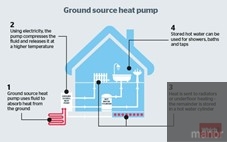
Both systems use electricity and because the temperature reached is not as high as with fossil fuels, the system must run longer in order to maintain a comfortable temperature.
Pros and Cons
Both systems are expensive to install, costing upwards of £9,000 and good insulation is a must if they are to be efficient. Air source heat pumps will need a large outdoor unit so space outside is necessary and these can be both noisy and cold in the immediate vicinity. Planning permission will be required in listed buildings and conservation areas. However on the plus side, they generate less CO2 than conventional systems, and some money is available via Government grants to offset the initial costs. They are most economic when used in conjunction with renewable energy providers such as solar panels, using the energy generated to run the pumps.
With the change in attitude of the home buyer, the house builders see the advantages of building with these new technologies as an asset to the home and fitting systems during building is much less disruptive and more efficient than replacing an old system